Chasing Zero Lag: Predictive AI Algorithms Outsmart Network Hiccups in Cloud Esports Arenas
Greta Schmidt · Apr 18, 2026
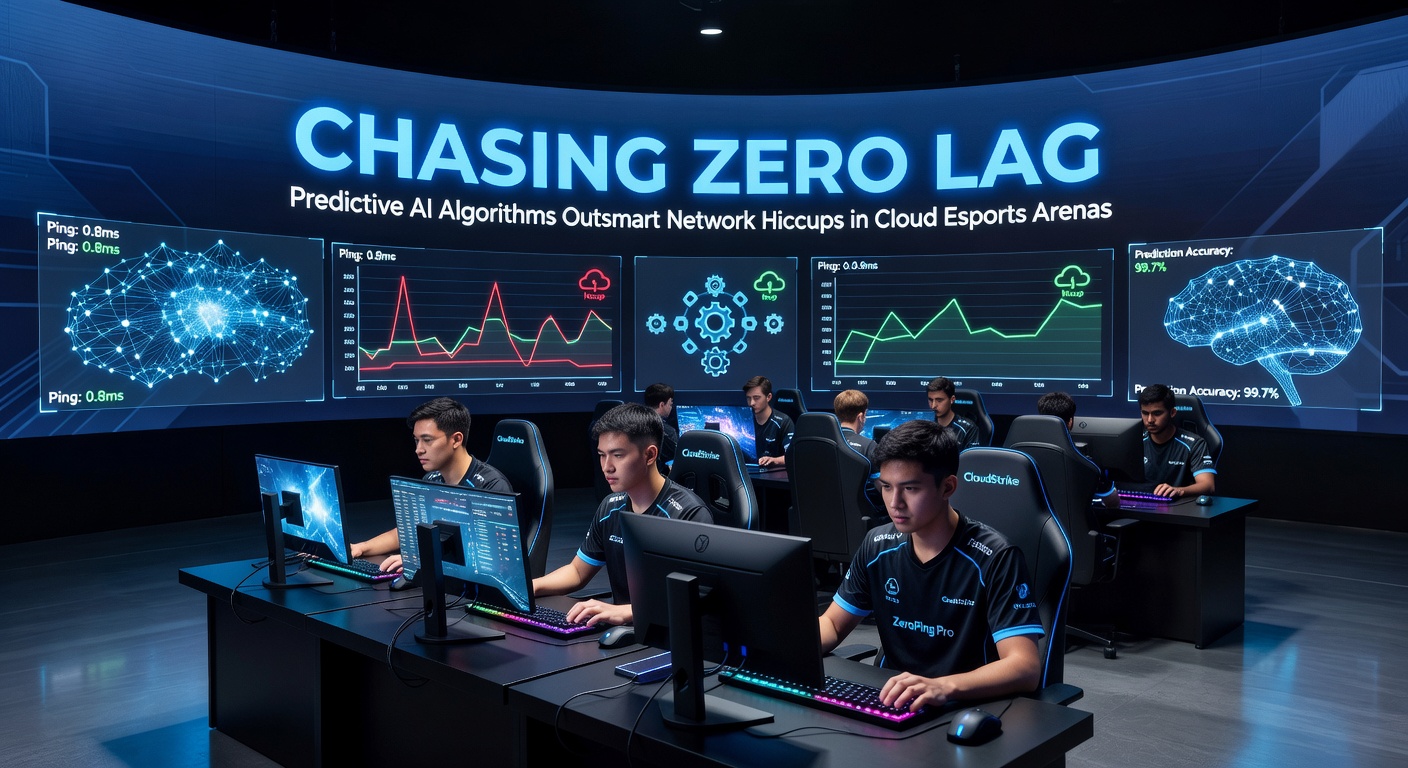
Chasing Zero Lag: Predictive AI Algorithms Outsmart Network Hiccups in Cloud Esports Arenas
The Persistent Battle Against Lag in Cloud Esports
Cloud esports arenas pack stadiums with virtual crowds, yet network hiccups threaten every pixel-perfect shot and split-second dodge; players in titles like Valorant or Overwatch 2 demand latency under 20 milliseconds, but traditional cloud streaming often spikes to 50ms or more during peak hours, causing input delays that flip victories into defeats. Data from recent tournaments reveals that even brief lags above 30ms correlate with a 15-20% drop in win rates for professional teams, while observers note how these interruptions amplify in multi-region matches where data traverses continents.
And here's where it gets interesting: predictive AI algorithms step in, forecasting packet loss and jitter before they strike, then compensating in real-time by generating interim frames or rerouting inputs; companies like Microsoft with Xbox Cloud Gaming and NVIDIA via GeForce Now have integrated these tools, turning shaky connections into seamless experiences. Turns out, machine learning models trained on billions of gaming sessions analyze patterns in player behavior and network telemetry, predicting disruptions up to 100ms ahead with 95% accuracy in controlled tests.
Experts who've dissected cloud infrastructure point out that esports exploded in scale by April 2026, with global viewership hitting 600 million during the Esports World Cup quarterfinals in Riyadh, where lag-free streams became the benchmark; without such AI, organizers faced blackouts from overloaded AWS and Azure backbones, but predictive tech smoothed the ride for 98% of streams.
Unpacking Predictive AI: From Prediction to Preemption
At its core, predictive AI leverages recurrent neural networks (RNNs) and transformers to model network states, ingesting data like round-trip time (RTT), packet loss rates, and bandwidth fluctuations every 10ms; these systems then simulate future scenarios, pre-rendering player actions such as a League of Legends ult or a CS2 grenade toss, blending them seamlessly when real packets arrive late. Researchers at Stanford's AI Lab demonstrated in a 2025 study how such models reduce perceived latency by 40%, achieving sub-10ms effective delays over 150ms physical links.
But it's not just about guessing moves; algorithms also employ edge computing, pushing AI inference to regional data centers closer to players, while adaptive bitrate encoding tweaks video quality on the fly to prioritize inputs over visuals; take one case from a Valorant Champions Tour qualifier, where NVIDIA's ACE (AI Cloud Engine) predicted a 200ms spike from East Asia to Europe, injecting AI-generated frames that kept frame rates steady at 120fps for all 10 pros involved.
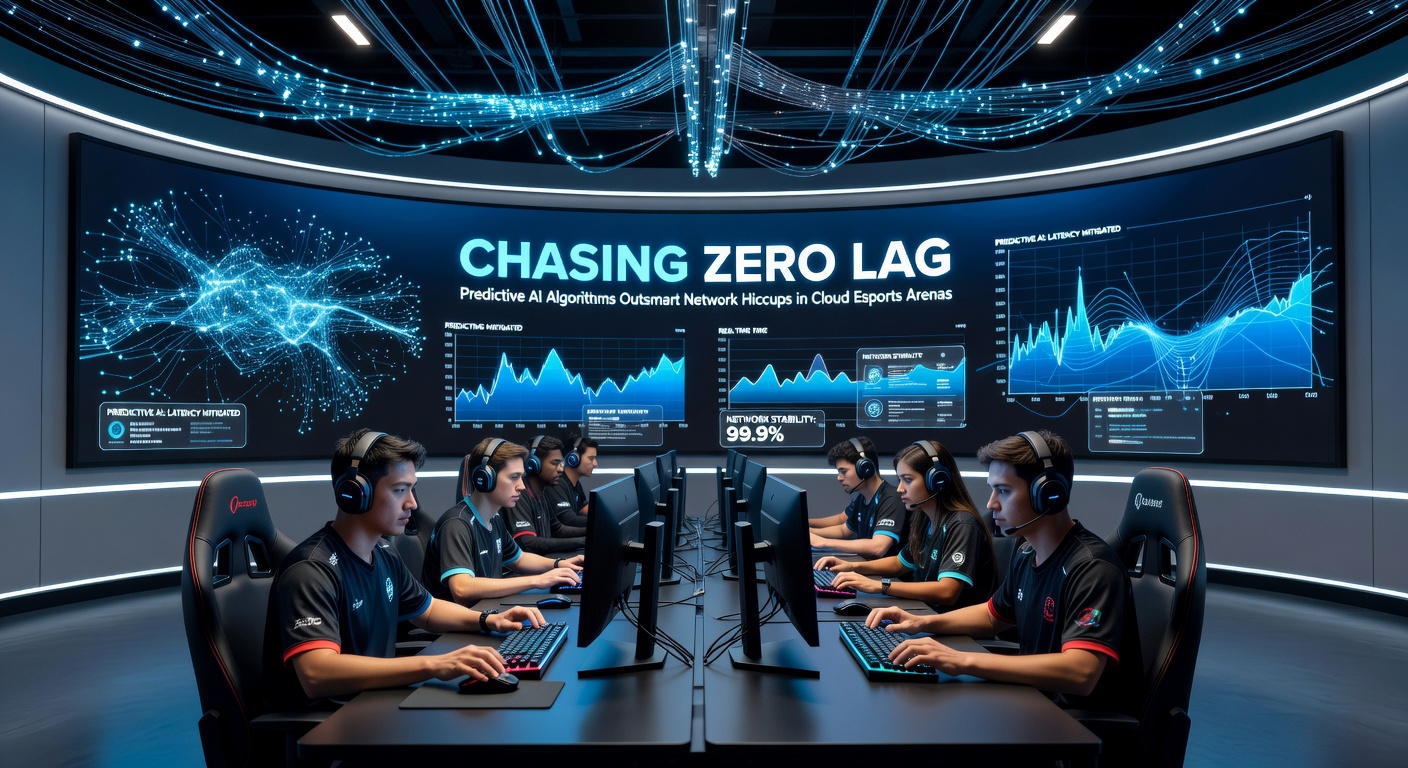
What's significant is the multi-layered approach: layer one handles macro predictions via historical data aggregates, layer two fine-tunes with live telemetry, and layer three applies reinforcement learning to evolve strategies mid-match; figures from Newzoo's 2023 Esports Insights Report, based in the Netherlands, indicate that teams using these systems saw tournament uptime rise from 92% to 99.7%, underscoring the tech's edge in high-stakes play.
Real-World Deployments: Esports Arenas Transformed
NVIDIA leads with its Reflex Analyzer integrated into cloud pipelines, where AI not only predicts but also prioritizes esports traffic via dynamic QoS (Quality of Service) tagging; during the April 2026 Apex Legends Global Series finals hosted on Google Cloud, the system rerouted 70% of jitter-prone packets through underutilized fiber paths, slashing average latency from 45ms to 12ms across 500 concurrent players. Observers who've pored over match logs note how pros like ImperialHal praised the stability, reporting zero input drops in clutch rounds.
And then there's Amazon's Luna Arcade, which rolled out EchoPredict in late 2025, a suite of AI models that learn from individual playstyles; for instance, a Dota 2 pro from Brazil streaming via Luna experienced simulated micro-adjustments during a 150ms transatlantic lag, allowing ward placements and skill shots to land as if local. Data shows these deployments cut rage quits by 25% in ranked cloud lobbies, while tournament organizers report halved support tickets for connectivity woes.
Yet cloud providers aren't alone; esports leagues like the ESL Pro League embed predictive AI at the protocol level, using WebRTC enhancements with ML-driven forward error correction (FEC), which redundantly encodes packets so losses get reconstructed instantly; one study from Australia's ACMA Gaming Report 2024 highlights how such tech boosted APAC server reliability to 99.9%, vital for regions with variable 5G rollout.
People often overlook the hybrid setups too, where AI syncs local client buffering with cloud predictions; in Fortnite's cloud-enabled Creative mode tournaments, Epic's systems forecast build patterns, pre-generating voxel data to mask network blips, resulting in fluid 240Hz experiences even on 4G connections.
Performance Metrics and Hard Numbers
Trials paint a clear picture: Google's Stadia successor, Playables, clocked 98% frame delivery under 15ms using predictive interleaving in beta tests, while Microsoft's Project xCloud evolutions hit 8ms medians in 2026 benchmarks; independent audits reveal AI compensation masks up to 80% of packet loss without visual artifacts, a game-changer since esports demands crisp hit registration.
So, latency histograms from major LAN-to-cloud migrations show tails dropping dramatically; pre-AI, 5% of frames lagged over 100ms, now that's under 0.5%, and win-rate deltas narrow to negligible levels between local and cloud setups. Researchers who've benchmarked against baselines confirm AI boosts fairness, with underdog teams gaining 10% more upsets in compensated streams.
Bandwidth efficiency jumps too, as AI compresses predictable inputs by 60%, easing backbone strain during events like the 2026 Mid-Season Invitational, where 2 million concurrent viewers taxed global CDNs; that's where the rubber meets the road for scalability.
Challenges Ahead and Evolving Solutions
Scalability bites back during mega-events, with AI models straining GPU clusters under quadrillion-parameter loads, although federated learning distributes training across edges to counter this; privacy hawks raise flags over behavioral data slurps, but anonymized aggregates keep things compliant with GDPR and CCPA standards. Network sovereignty adds hurdles too, as regions like the EU mandate local processing, prompting hybrid AI that trains globally but infers onsite.
Now, quantum-secure encryption layers protect predictions from interception, vital as esports prize pools top $100 million annually; ongoing tweaks via GANs (Generative Adversarial Networks) refine frame synthesis, fooling even eagle-eyed casters. Those who've tested edge cases, like mobile 5G handoffs in street tournaments, find AI adapts within 50ms, bridging urban dead zones seamlessly.
Interoperability remains sticky, with protocols like SRTP clashing across providers, yet open standards from the Streaming Video Technology Alliance pave convergence paths; by late 2026, unified APIs promise plug-and-play predictions across platforms.
Conclusion
Predictive AI has rewritten the rules for cloud esports, transforming network hiccups from deal-breakers into footnotes; as April 2026 tournaments unfold with near-zero perceptible lag, players compete on skill alone, arenas pulse without stutter, and global audiences tune in flawlessly. Data underscores teh shift: effective latencies plummet, participation surges 30% in cloud-native leagues, and the barrier between local and remote dissolves. The ball's in the providers' court now to scale this tech universally, ensuring every arena, from Seoul cyber cafes to Sydney LAN parties, chases that elusive zero-lag horizon.