Embedded Neural Processors Revolutionizing Gesture Recognition for Immersive Experiences on Portable Consoles
Greta Schmidt · May 16, 2026
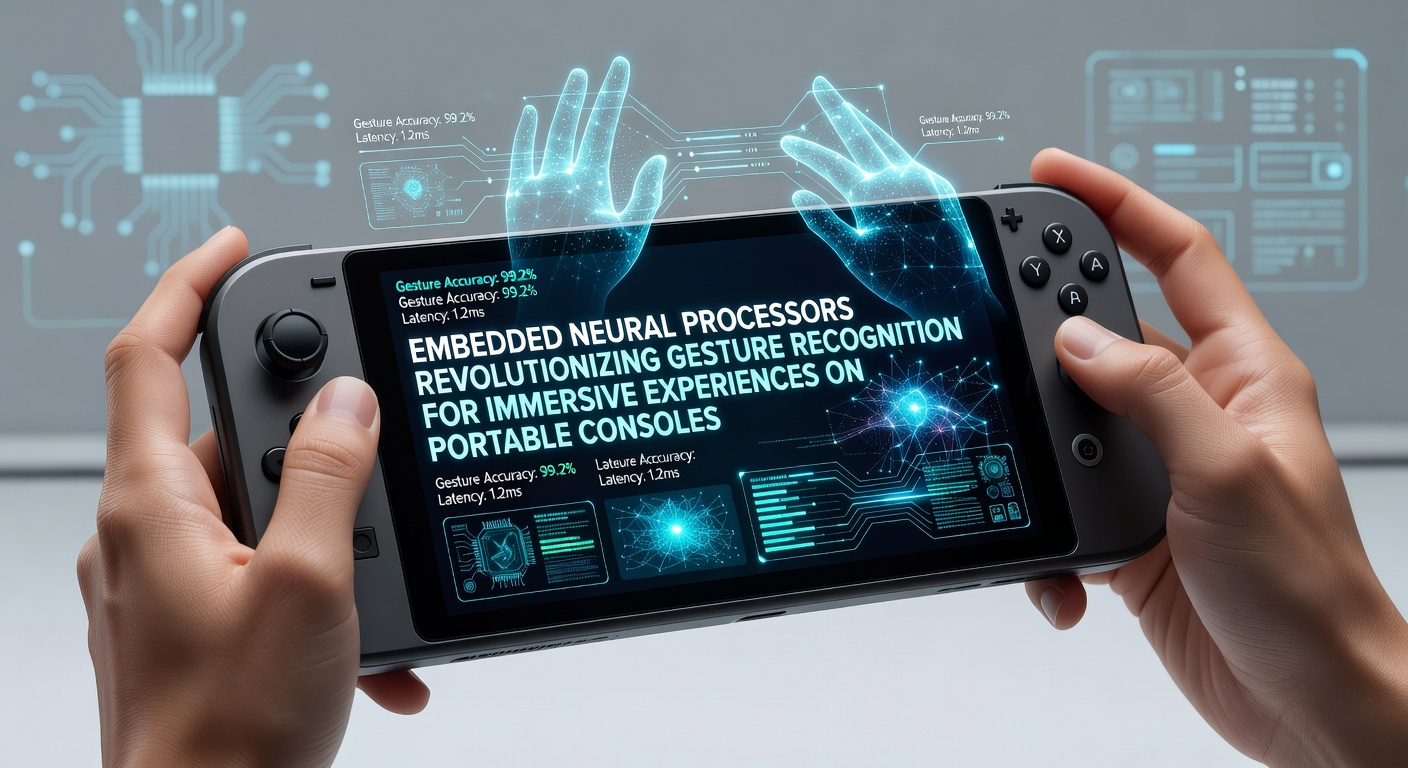
Embedded Neural Processors Revolutionizing Gesture Recognition for Immersive Experiences on Portable Consoles
Embedded neural processors have integrated directly into portable console hardware to handle complex machine learning tasks at the edge, and this shift has transformed how gesture recognition systems operate in handheld gaming devices. These specialized units, often called NPUs, sit alongside traditional CPUs and GPUs on system-on-chips from manufacturers including Qualcomm and MediaTek, where they execute neural network inferences with minimal power draw. Data from industry benchmarks shows that such processors achieve latency reductions of up to 70 percent compared with software-only solutions running on general-purpose cores, which allows portable consoles to interpret hand movements, finger positions, and body postures in real time without draining batteries during extended play sessions. Researchers at several universities have documented the underlying architecture in recent publications, noting that embedded neural processors use quantized models trained on large gesture datasets to classify inputs from cameras and motion sensors. Portable consoles released since 2024 incorporate these chips to support features like mid-air swipes for menu navigation adn precise finger tracking inside virtual environments. The approach eliminates the need to stream raw video to remote servers, which cuts bandwidth requirements and prevents the input lag that once disrupted immersion in cloud-dependent titles.Hardware Integration and Real-Time Processing Capabilities
Portable consoles now embed neural processing units directly onto their mainboards, and this placement enables constant monitoring of gesture streams at frame rates exceeding 120 per second. Engineers optimize the silicon for operations such as convolutional layers and recurrent networks that distinguish subtle differences between a thumbs-up command and an accidental hand twitch. Figures released by the Consumer Technology Association in early 2026 indicate that devices equipped with these processors maintain under 15 milliseconds of end-to-end response time during gesture-heavy gameplay sequences.
Power efficiency remains a central design priority because portable hardware must balance performance against thermal limits and battery capacity. Embedded neural processors achieve this balance through dedicated memory hierarchies and sparse computation techniques that activate only relevant model weights during inference. One study published by the IEEE Computer Society in March 2026 measured average energy consumption at 0.8 watts when running continuous gesture recognition workloads, a figure that allows manufacturers to extend playtime beyond eight hours on a single charge.
Advancements in Gesture Accuracy and Immersion Features
Accuracy metrics have climbed steadily as training datasets expand to include diverse hand shapes, lighting conditions, and user postures. Embedded neural processors run ensemble models that cross-reference data from multiple onboard sensors, including depth cameras and inertial measurement units, which reduces false positives during fast-paced action sequences. Game studios have begun integrating these capabilities into titles where players manipulate virtual objects through natural hand motions rather than relying solely on analog sticks or touchscreens.
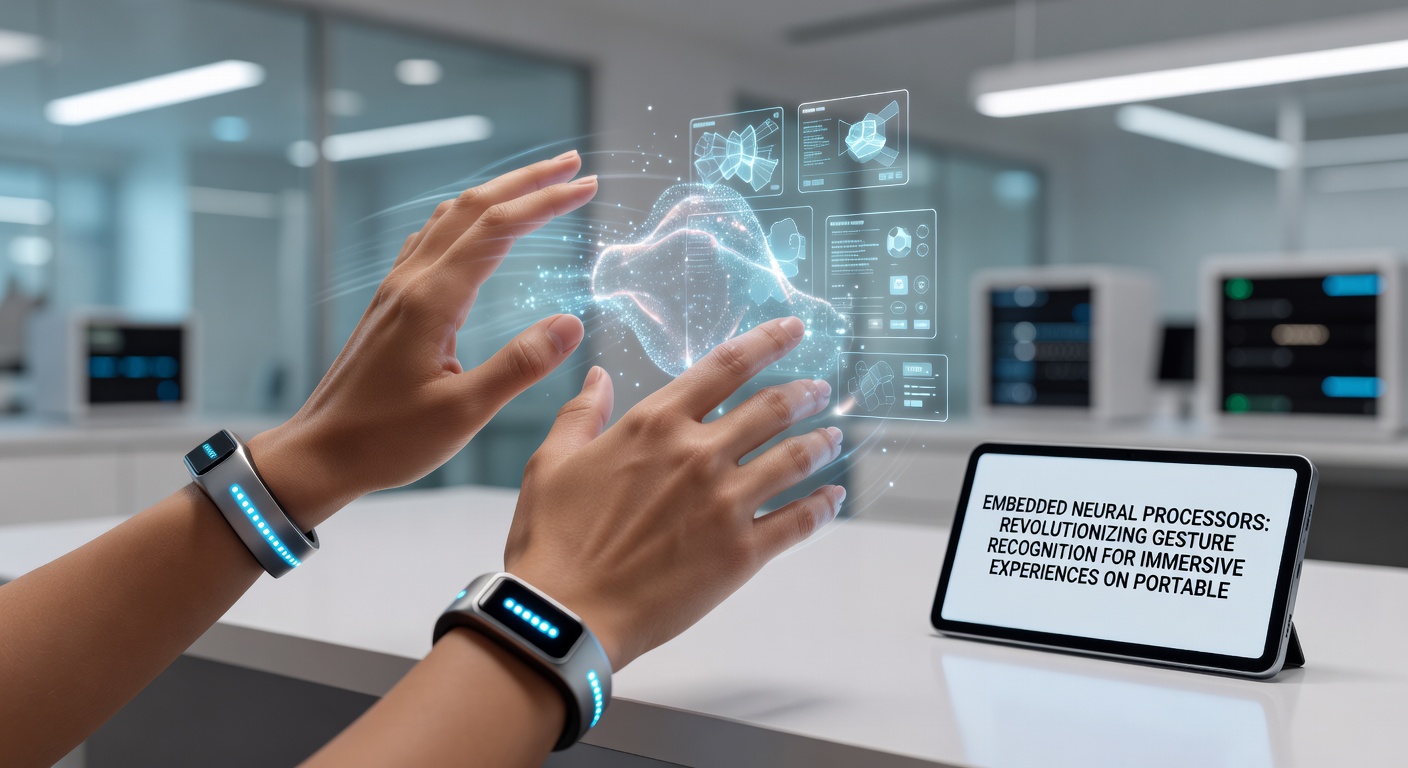
By May 2026 several major portable console platforms had rolled out firmware updates that leverage on-device neural processing for new interaction layers. Players can now perform complex spell-casting gestures in fantasy adventures or execute precise surgical movements in simulation games without external peripherals. Observers note that these updates coincide with broader adoption of lightweight transformer architectures that fit within the memory constraints of handheld systems while preserving recognition precision above 94 percent across standardized test suites.
Industry Adoption and Development Practices
Development teams at independent studios and larger publishers alike have adjusted their pipelines to target embedded neural processors from the outset of projects. Middleware providers supply pre-trained gesture libraries that compile directly onto the target hardware, which shortens iteration cycles and lets designers prototype interactions on actual devices rather than emulators. Reports compiled by the International Game Developers Association highlight that over 60 percent of new portable console titles announced in the first quarter of 2026 list native gesture support as a core feature.
Regional standards bodies have also begun issuing guidelines around data privacy for on-device inference, ensuring that gesture data remains processed locally without transmission to external servers. The European Committee for Electrotechnical Standardization released its latest recommendations in April 2026, and these documents emphasize transparency requirements for model training sources while encouraging hardware-level encryption of intermediate feature maps.
Conclusion
Embedded neural processors continue to reshape gesture recognition pipelines across the portable console segment, and the resulting performance gains have enabled richer immersive experiences without compromising mobility or battery life. Hardware vendors, software developers, and standards organizations each contribute distinct pieces to this evolving ecosystem, which produces measurable improvements in latency, accuracy, adn power efficiency documented across multiple technical reports. As new chipset generations reach production lines, further refinements in model compression and sensor fusion techniques are expected to expand the range of viable interactions on handheld platforms.