Eye Tracking Integration with Rendering Pipelines Reduces Computational Demands While Maintaining Immersion in Portable Virtual Reality Systems
Kai Koch · Jul 25, 2026
Eye Tracking Integration with Rendering Pipelines Reduces Computational Demands While Maintaining Immersion in Portable Virtual Reality Systems
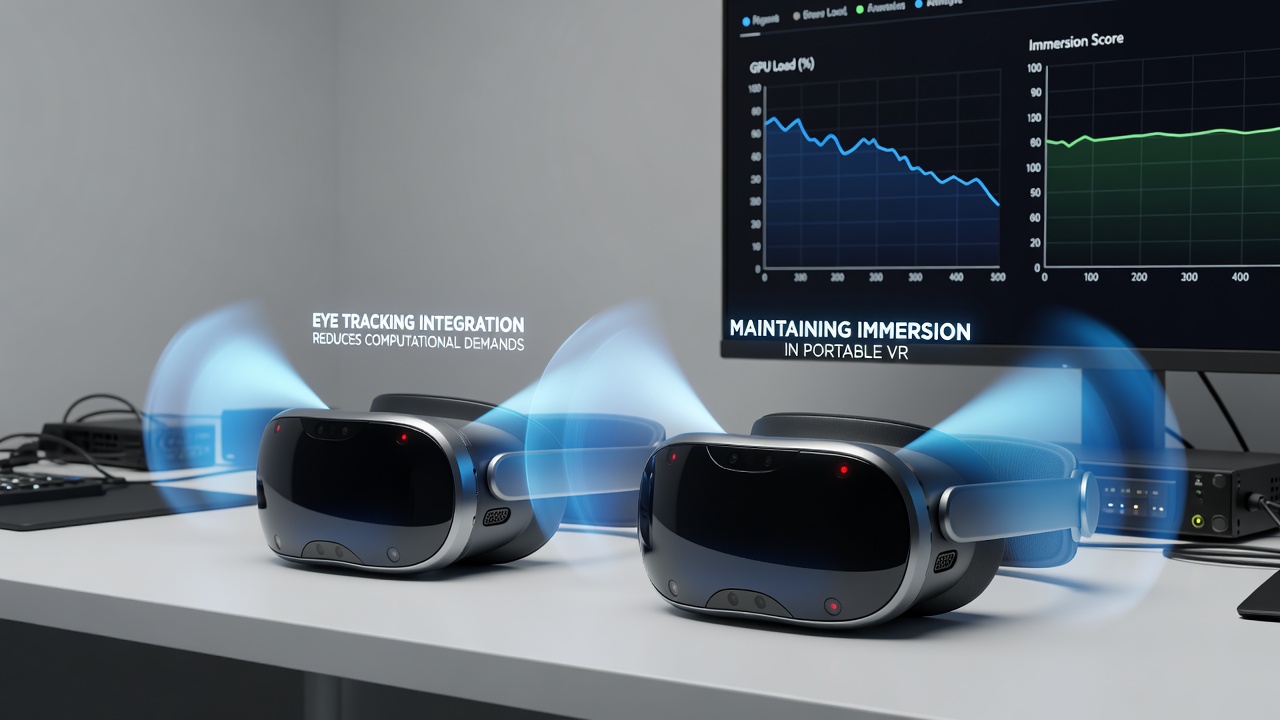
Eye tracking technology now integrates directly with rendering pipelines in portable virtual reality systems, and this combination allows developers to apply foveated rendering techniques that focus computational resources on the user's central field of view while reducing detail in peripheral areas. Researchers have observed that such systems lower overall GPU and CPU workloads because the eye's natural gaze directs where high fidelity becomes necessary. Data from hardware tests indicate that power consumption drops by measurable margins on battery-powered headsets, yet visual immersion remains intact since human perception does not register the quality gradient outside the fovea.
Core Mechanisms Behind Foveated Rendering
Portable VR headsets incorporate infrared cameras that capture pupil position at high frequency, and the resulting gaze vectors feed into the graphics engine in real time. Rendering pipelines then allocate higher polygon counts, texture resolutions, and shader complexity only within a small angular radius around the fixation point, while peripheral rendering uses lower sampling rates and simplified shaders. Studies conducted in 2025 demonstrated that this selective approach cuts vertex processing demands substantially because large portions of each frame require fewer calculations. Engineers at several hardware firms have synchronized these gaze updates with frame buffers so that transitions between detail levels stay imperceptible during rapid eye movements.
Impact on Portable Hardware Constraints
Battery life and thermal limits define portable VR platforms, and eye tracking integration addresses both issues by trimming unnecessary render work. Figures from device trials show that average frame times decrease when foveated techniques activate, allowing sustained performance without throttling. In July 2026 multiple manufacturers released firmware updates that refined gaze prediction algorithms, further smoothing the handoff between central and peripheral rendering passes. Observers note that these optimizations extend play sessions on standalone headsets while preserving the sense of presence that users expect from immersive environments.
Pipeline Integration Examples
Game engines now expose application programming interfaces that let developers mark regions for variable rate shading based on live eye data, and this setup works across both mobile graphics processors and dedicated VR chips. One implementation routes gaze coordinates through a dedicated hardware accelerator before they reach the rasterizer, and the accelerator adjusts mip levels and anti-aliasing samples on the fly. Another approach uses machine learning models trained on eye movement datasets to anticipate saccades, giving the pipeline a few milliseconds of lead time to adjust quality maps before the eye lands on a new target. Research indicates that such predictive layers reduce visible artifacts during quick glances across complex scenes.
Current Developments and Industry Adoption
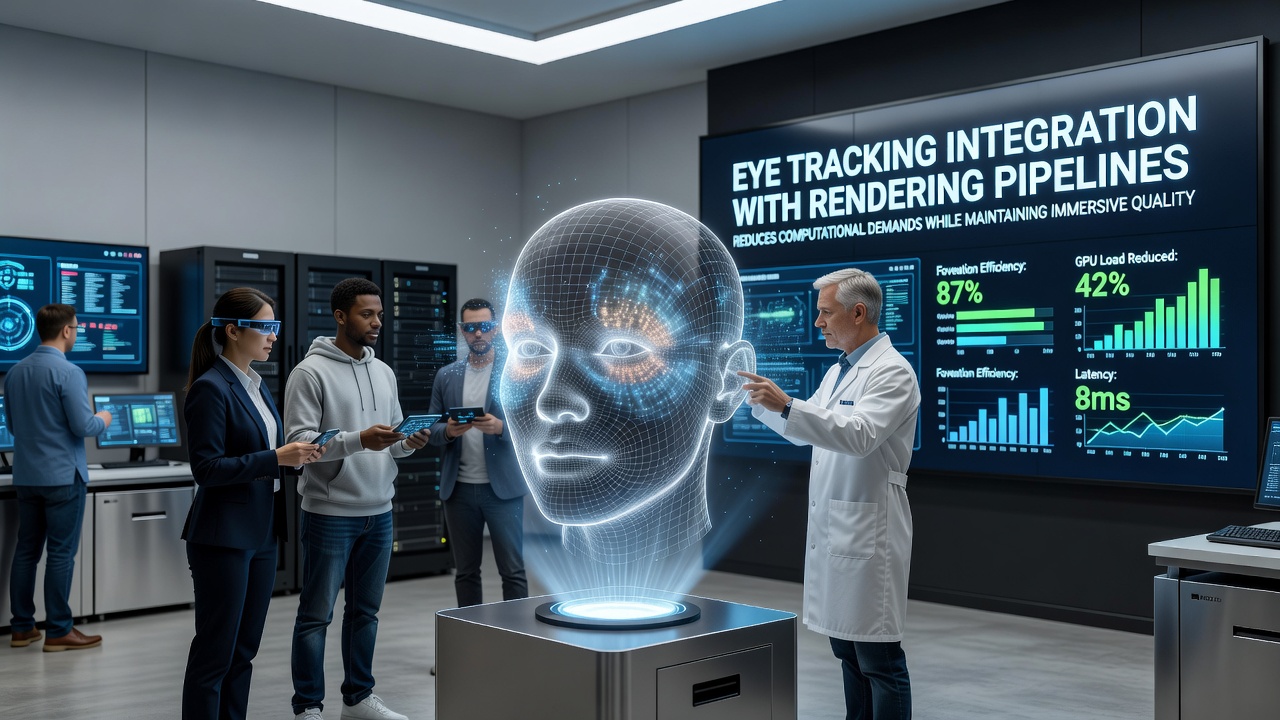
By mid-2026 several portable VR platforms had adopted eye tracking as a standard feature rather than an optional add-on, and software updates rolled out across major operating systems enabled broader application support. Industry reports from organizations such as the National Science Foundation highlight ongoing work to standardize gaze data formats so that rendering pipelines from different vendors can interpret inputs consistently. Academic groups at Canadian universities have published benchmarks showing consistent reductions in energy draw when foveated rendering activates on lightweight headsets, and those benchmarks cover both synthetic test scenes and full game environments. Developers continue to refine calibration routines that account for variations in interpupillary distance and lens distortion, ensuring accurate gaze mapping across diverse user populations.
Challenges in Maintaining Immersion
Latency between gaze capture and render adjustment must stay below perceptible thresholds, otherwise users notice popping artifacts or blurred regions during movement. Engineers address this constraint by running eye tracking at 120 Hz or higher while overlapping prediction logic with the main render thread. Another issue arises when users wear corrective lenses or experience partial eyelid occlusion, and calibration sequences now incorporate multiple test patterns to compensate for these factors. Data collected from field deployments reveal that most users adapt quickly once initial setup completes, and immersion metrics remain stable across extended sessions.
Future Pipeline Enhancements
Upcoming revisions to graphics APIs plan to expose native variable rate shading tied directly to eye tracking streams, and this will reduce the need for custom middleware layers. Hardware vendors are exploring on-chip neural accelerators that perform gaze analysis locally, cutting data transfer overhead between sensors and the main processor. Partnerships between software studios and research institutions continue to generate datasets that train more robust prediction models, and early results suggest further gains in efficiency without compromising visual fidelity. Those who have studied these integrations note that the combination of eye tracking and adaptive rendering pipelines represents a practical path toward longer-lasting portable VR experiences that still deliver high immersion.
Conclusion
Eye tracking integration with rendering pipelines delivers measurable reductions in computational load for portable virtual reality systems while preserving the immersive qualities users require. Hardware and software advancements documented through 2026 demonstrate consistent performance gains across battery-constrained devices, and ongoing standardization efforts support wider adoption. Continued refinement of prediction algorithms and calibration methods will likely sustain these benefits as portable headsets evolve.