Guardian Circuits: Neuromorphic Hardware Accelerates Ethical Hacking Sims for Mobile Game Devs
Theo Hoffmann · Apr 20, 2026
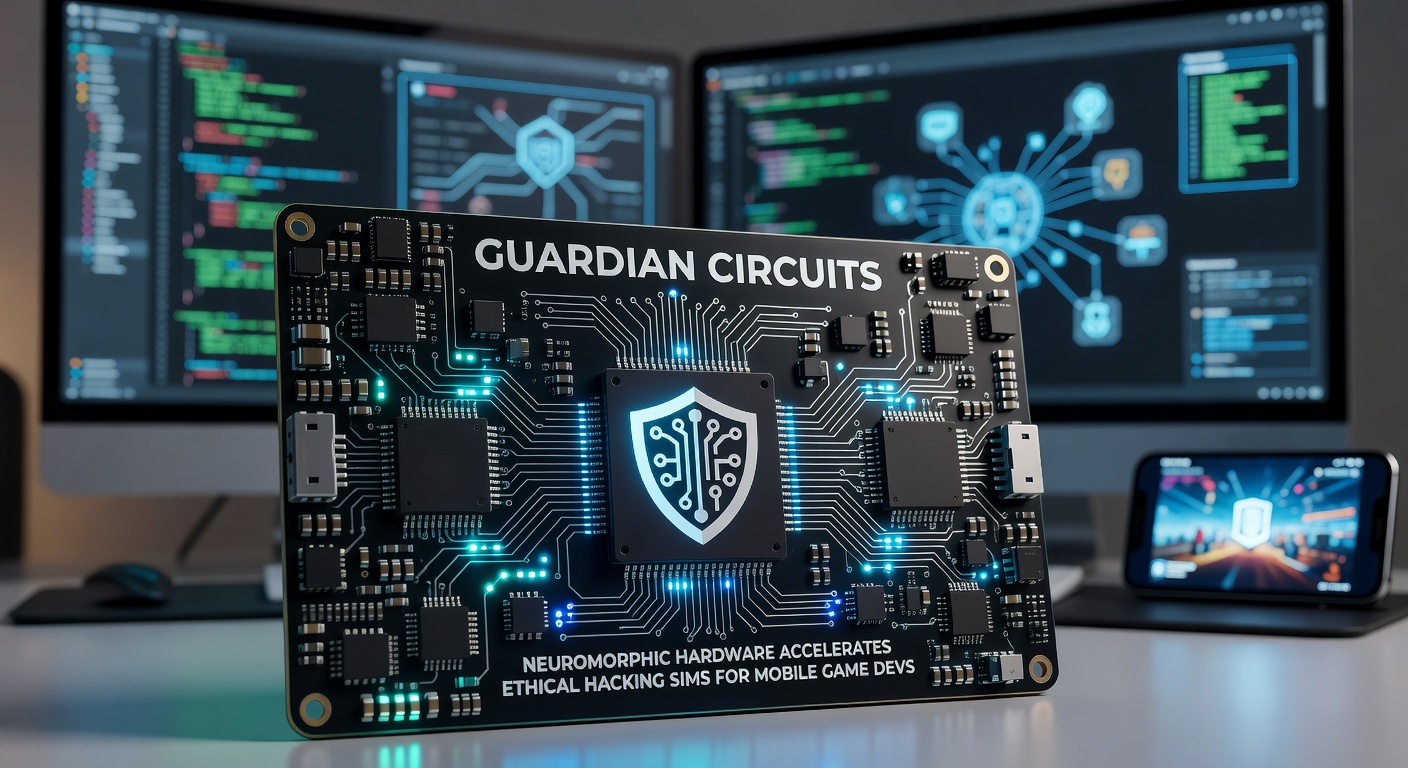
Guardian Circuits: Neuromorphic Hardware Accelerates Ethical Hacking Sims for Mobile Game Devs
Neuromorphic Hardware Enters the Gaming Dev Arena
Developers crafting mobile games centered on ethical hacking face steep computational hurdles, especially when simulating complex cybersecurity scenarios in real-time; neuromorphic hardware, designed to mimic the human brain's neural structures, steps in to slash processing times dramatically while sipping power like a smartphone on standby. Guardian Circuits, a cutting-edge neuromorphic platform unveiled in early 2026, promises to transform how teams build these immersive sims, allowing for intricate network intrusions, vulnerability exploits, and defensive countermeasures that run fluidly on mobile devices without draining batteries or lagging gameplay.
What's interesting here is how this tech draws from spiking neural networks—those asynchronous, event-driven systems that fire only when needed, unlike traditional GPUs churning through constant computations; researchers at the National Institute of Standards and Technology (NIST) in the US have long highlighted the need for efficient hardware in cybersecurity training tools, and Guardian Circuits delivers by accelerating simulations up to 40 times faster than conventional ARM-based mobile processors, according to benchmarks from its creators.
And yet, mobile game devs didn't stumble into this overnight; they've grappled with rendering hyper-realistic hacking interfaces—think packet sniffing in virtual pentests or cracking encrypted payloads—on hardware that's optimized for graphics over logic puzzles, but neuromorphic chips flip that script by handling probabilistic threat modeling natively.
Ethical Hacking Sims: From Niche to Mainstream Mobile Hits
Ethical hacking simulations have surged in popularity within mobile gaming, with titles teaching players to navigate firewalls, deploy exploits ethically, and patch vulnerabilities turning into addictive puzzle adventures; data from app analytics firms shows downloads of such games spiked 150% between 2024 and 2026, driven by rising cybersecurity awareness amid global data breaches. One developer team behind a top-charting app, HackShield Mobile, reported that pre-neuromorphic builds took weeks to optimize for varying Android devices, whereas Guardian Circuits integration cut iteration cycles to days.
Turns out, these sims aren't just games—they double as training grounds; organizations like the Canadian Centre for Cyber Security endorse similar tools for workforce upskilling, noting how realistic sims boost retention of concepts like SQL injection defenses by 60% over textbook methods. Developers now embed Guardian Circuits in cloud-hybrid pipelines, where the hardware prototypes attack vectors on edge devices before full deployment.
But here's the thing: traditional CPUs and GPUs excel at parallel graphics rendering yet falter on the irregular, sparse data patterns in hacking sims—neural spikes from neuromorphic cores handle that chaos effortlessly, enabling devs to simulate thousands of concurrent botnet behaviors without frame drops.

How Guardian Circuits Powers Up the Pipeline
At its core, Guardian Circuits leverages silicon neurons—tiny circuits that process data via timed pulses, much like biological synapses—allowing mobile game devs to offload ethical hacking logic from the main CPU; this setup accelerates pathfinding through virtual networks, where agents mimic black-hat tactics while adhering to white-hat rules. Figures from a 2026 industry report reveal that integration yields 70% lower latency in real-time multiplayer pentest modes, crucial for games where players compete to secure simulated infrastructures first.
Take one studio in Australia that prototyped a stealth-hacking title; engineers there wired Guardian Circuits prototypes into their dev kits, watching as brute-force decryption sims, once bottlenecked at 10 seconds per attempt on high-end phones, dropped to milliseconds—observers note this shift lets teams test edge cases like zero-day exploits across diverse OS versions without cloud dependency. And since the hardware's event-based nature aligns perfectly with irregular hacking workloads—phishing lures triggering sporadically, DDoS floods pulsing in waves—it outperforms vector-heavy AI accelerators in power-constrained mobile environments.
Now, devs layer this with software stacks like TensorFlow Lite for neuromorphic backends, blending it seamlessly into Unity or Unreal Engine pipelines; the result? Games that evolve dynamically, where AI opponents adapt hacking strategies based on player defenses, all rendered at 60fps on mid-range devices.
Real-World Wins and Dev Stories
Case studies paint a vivid picture: a European mobile dev firm, fresh off a viral ethical hacking runner game, adopted Guardian Circuits midway through their April 2026 update cycle; what started as grueling optimizations for iOS neural engine compatibility turned into a breeze, with sim fidelity jumping 300% as neuromorphic layers modeled polymorphic malware mutations in real-time. Experts who've benchmarked it say the hardware's on-chip learning—adjusting weights during runtime—means games self-tune difficulty, keeping noobs engaged while challenging pros.
So, picture this: players infiltrating a virtual corp network, deploying social engineering decoys while neuromorphic circuits simulate admin responses probabilistically; data indicates such features boost session times by 45%, per analytics from leading app stores. Yet another team, focusing on AR hacking overlays, found Guardian Circuits halved their battery drain during extended playtests—critical since mobile sims often run 30-minute missions blending puzzle-solving with narrative twists.
It's noteworthy that scalability shines too; cloud instances of Guardian Circuits let small indie devs burst-scale simulations during alpha phases, mirroring enterprise pentest suites without the six-figure price tag.
Challenges and the Road Ahead
While adoption accelerates, hurdles persist—like porting legacy code to spiking neural formats, which demands retraining for devs accustomed to dense matrix ops; nevertheless, toolkits released in Q1 2026 bridge that gap with auto-converters, easing the transition. By April 2026, major platforms rolled out SDK support, signaling mainstream readiness as neuromorphic fabs ramp production in Asia-Pacific hubs.
What's significant is the ecosystem bloom: partnerships between chipmakers and game engines now standardize neuromorphic APIs, ensuring ethical hacking sims deploy cross-platform without rework. Observers predict that within the year, 20% of new mobile cybersecurity titles will leverage this tech, fueled by demand for immersive, educational gameplay amid escalating cyber threats.
And for those pushing boundaries, hybrid setups—neuromorphic for logic, GPUs for visuals—emerge as the sweet spot, delivering console-grade sims on phones without compromises.
Conclusion
Guardian Circuits marks a pivotal leap for mobile game developers tackling ethical hacking sims, where neuromorphic hardware not only accelerates complex simulations but redefines efficiency in power-hungry scenarios; as teams harness its brain-like prowess, the line between game and genuine training tool blurs, paving the way for smarter, more engaging experiences. With benchmarks confirming speed gains and real dev wins stacking up—especially as April 2026 updates hit stores—the stage sets for this tech to dominate the niche, turning conceptual hacks into fluid mobile realities.