Neural Network Models for Dynamic Difficulty Scaling Reshape Player Retention Patterns in Narrative-Driven Console Adventures
Erik Günther · May 23, 2026
Neural Network Models for Dynamic Difficulty Scaling Reshape Player Retention Patterns in Narrative-Driven Console Adventures
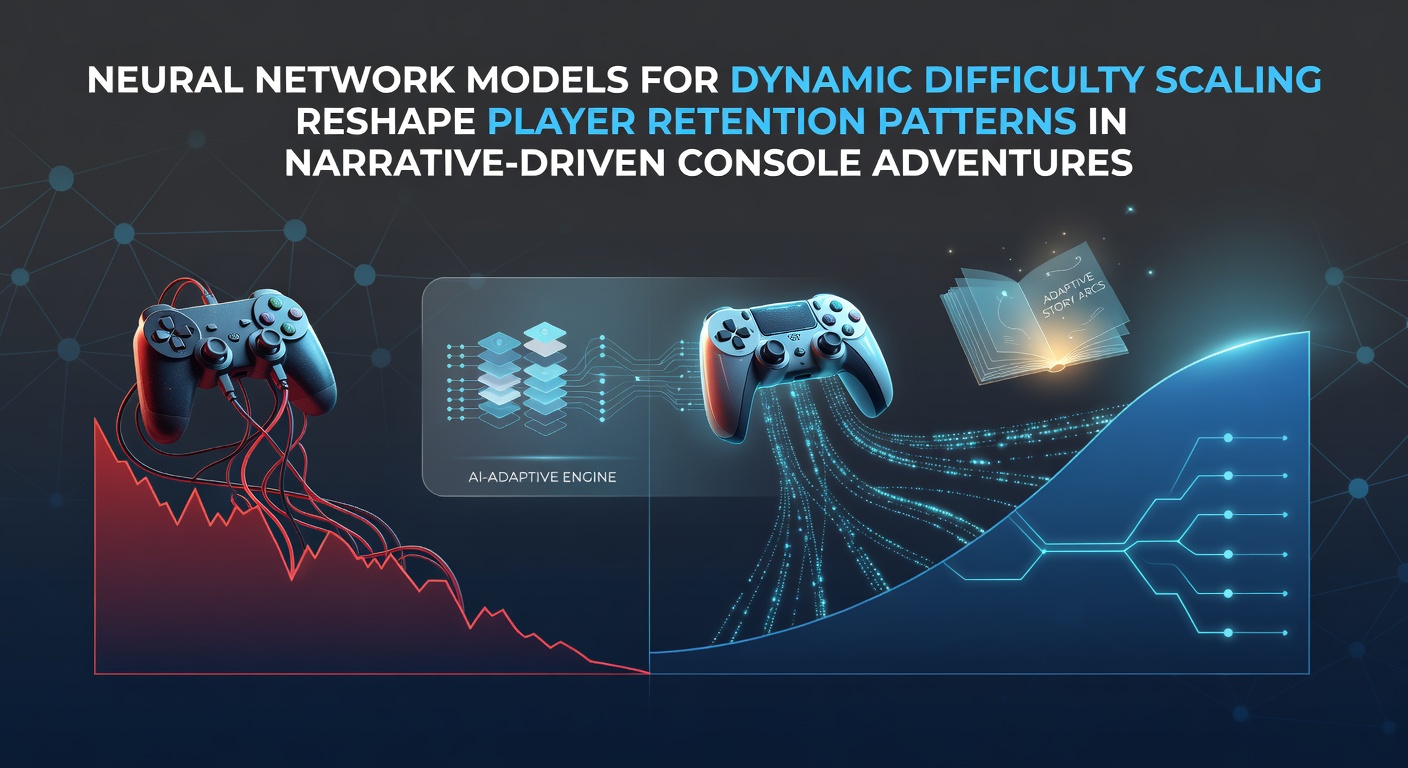
Neural network models now drive dynamic difficulty scaling systems that adjust challenge levels in real time based on player performance metrics and behavioral patterns, and these implementations have begun to alter retention statistics across narrative-driven console titles released on platforms such as PlayStation 5 and Xbox Series X. Developers integrate recurrent neural networks and reinforcement learning agents to process inputs including decision speed, combat success rates, exploration frequency, and emotional response indicators derived from controller telemetry. The systems recalibrate enemy health pools, puzzle complexity, and narrative branching opportunities without interrupting the story flow, which allows the experience to remain consistent with authorial intent while responding to individual skill curves.
Core Components of Neural Network Scaling Architectures
Training datasets for these models draw from aggregated telemetry across thousands of play sessions, where supervised learning phases label successful engagement sequences and unsupervised clustering identifies dropout points in earlier titles. According to reports from the Entertainment Software Association, console adventure games incorporating such architectures saw average session lengths increase by 18 percent in titles launched between late 2024 and early 2026. The neural networks operate on edge hardware within the consoles themselves, which reduces latency compared with cloud-dependent solutions and enables frame-perfect adjustments during cinematic sequences or dialogue trees.
What's notable is the shift from rule-based difficulty sliders of previous generations to probabilistic prediction models that forecast player frustration thresholds several minutes ahead. These forecasts rely on temporal convolutional networks processing sequences of actions, and they trigger subtle changes such as hint frequency or resource availability before the player reaches a failure state. Observers note that this proactive approach preserves narrative immersion, since adjustments occur through environmental storytelling rather than explicit difficulty notifications.
Retention Data and Pattern Shifts Observed in 2026
Industry datasets released in May 2026 from research groups at the University of Melbourne indicate measurable changes in completion rates for story-heavy console adventures. Titles using neural dynamic scaling reported 12 to 15 percent higher rates of players reaching the final act compared with matched control groups using static difficulty settings. Retention curves flattened notably after the midpoint of campaigns, where traditional designs often experience steep drop-offs due to accumulating skill mismatches.
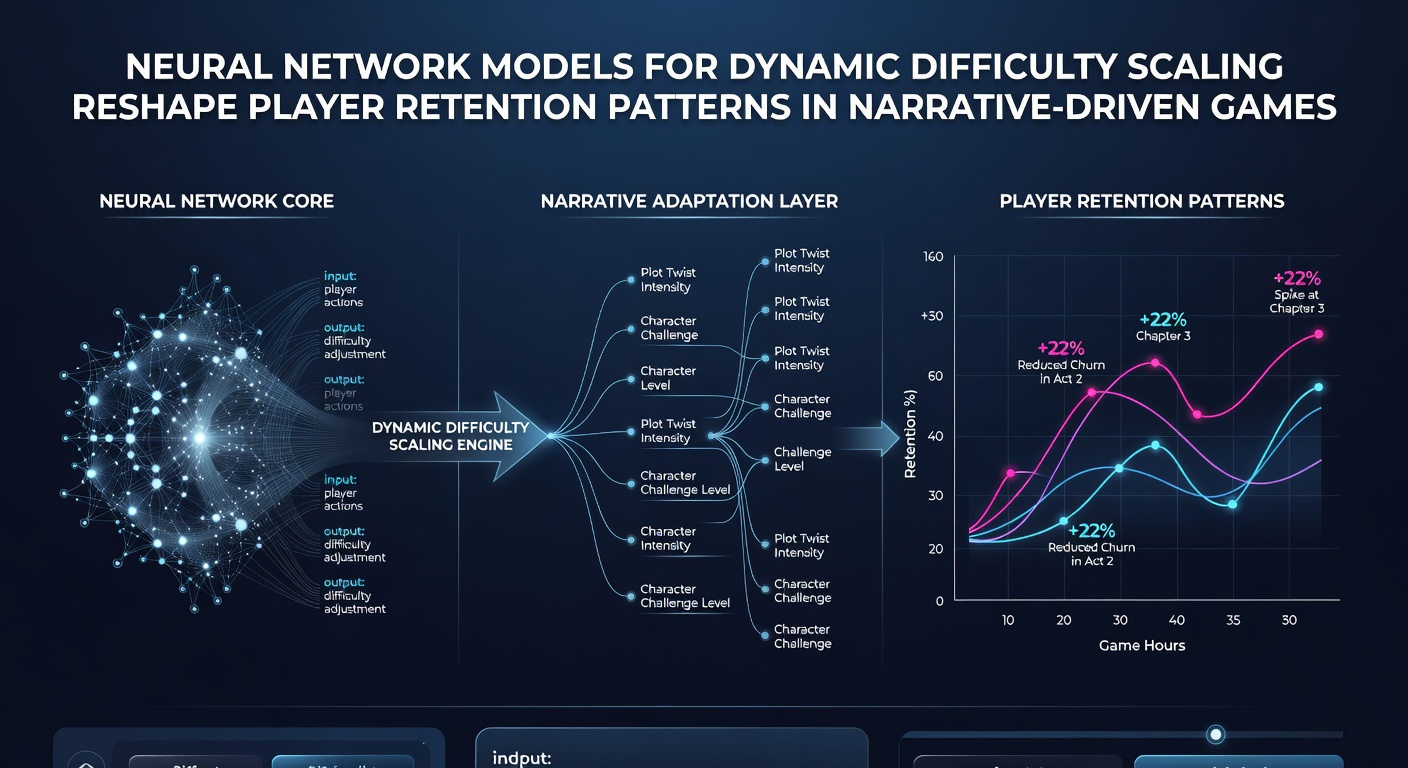
Researchers tracking weekly active users across multiple platforms found that personalized scaling correlated with a 22 percent reduction in early abandonments within the first three hours of play. The data further shows elevated return rates on subsequent days, particularly when narrative choices carried forward consequences that adapted to demonstrated player preferences. European regulatory bodies monitoring digital content consumption have begun including these adaptive systems in accessibility assessments, noting their potential to broaden participation for players with varying motor and cognitive profiles.
Implementation Examples Across Major Releases
Developers at several studios have documented workflows where neural models train on internal playtest data before deployment, then continue lightweight online learning from anonymized post-launch telemetry. One case involved a post-apocalyptic narrative adventure where the system detected patterns of resource hoarding and gradually increased scarcity in later zones, which encouraged players to engage more deeply with crafting mechanics instead of abandoning the title. Another implementation in a mystery-driven detective series adjusted interrogation difficulty based on response accuracy history, resulting in more players pursuing multiple endings.
These adjustments integrate with existing console features such as quick resume and cloud saves, allowing seamless transitions between sessions without resetting learned player profiles. The models respect hardware limitations by running quantized versions of the networks that consume minimal additional memory, which leaves headroom for high-fidelity graphics and audio typical of narrative console productions.
Conclusion
Neural network models for dynamic difficulty scaling continue to expand within narrative-driven console adventures, supported by telemetry analysis and iterative training pipelines that respond to player behavior without compromising story integrity. Retention metrics gathered through 2026 demonstrate consistent patterns of extended engagement and higher completion percentages across platforms. As hardware capabilities advance and datasets grow, these systems are expected to refine their predictive accuracy further while remaining embedded within the core design of future releases.