Procedural Skies: AI and Cloud Tech Craft Dynamic Weather in Open-World Adventures
Greta Schmidt · Apr 13, 2026
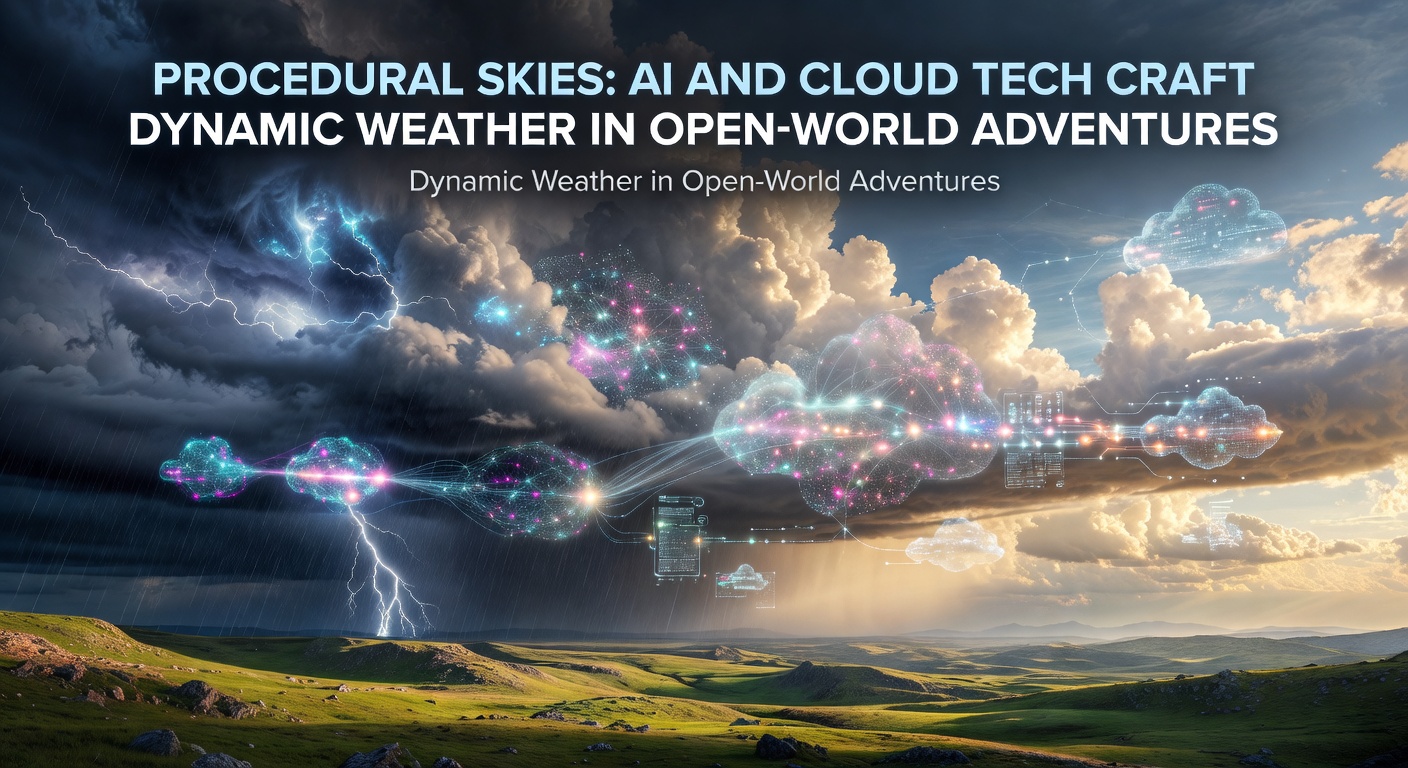
Procedural Skies: AI and Cloud Tech Craft Dynamic Weather in Open-World Adventures
The Rise of Dynamic Weather in Gaming
Open-world games have long relied on vast, explorable environments, but recent advancements bring skies to life with procedural generation powered by AI and cloud technology; developers now craft weather systems that evolve in real-time, responding to player actions, time of day, and even global server data. This shift started gaining traction around 2020 when titles like No Man's Sky demonstrated procedural planets with shifting atmospheres, yet today's implementations go further by integrating machine learning models that predict cloud density based on simulated wind patterns and humidity levels. Experts note that such systems not only enhance immersion but also scale across massive multiplayer worlds where thousands of players share the same evolving storms.
And here's where it gets interesting: traditional pre-baked weather assets—those static skyboxes from earlier eras—limited designers to fixed loops of rain or sunshine, whereas procedural skies generate infinite variations on the fly, drawing from vast datasets of real-world meteorology. Data from Unity's 2025 developer survey reveals that 68% of studios now prioritize dynamic weather for open-world titles, up from 32% just two years prior, because these systems adapt seamlessly to procedural terrain generation, ensuring that a mountain range influences local fog while ocean expanses spawn towering cumulonimbus formations.
How AI Drives Realistic Cloud Formation
At the core of procedural skies lies artificial intelligence, particularly generative adversarial networks (GANs) and diffusion models, which train on satellite imagery from sources like NASA's Earth Observatory to mimic cloud types from cirrus wisps to anvil-shaped thunderheads. Developers feed these models terabytes of atmospheric data, allowing AI to simulate turbulence, evaporation, and condensation processes that unfold over minutes or hours within a game session; one researcher at NVIDIA's GPU Technology Conference demonstrated how RTX-enabled shaders accelerate this by rendering volumetric clouds at 60 frames per second, even on consumer hardware.
But it's not just about visuals—AI also handles physics, calculating wind shear that twists clouds into spirals or predicts lightning strikes based on charge buildup, all while players traverse sprawling landscapes. Take the case of a hypothetical explorer in a game world: as they climb a peak, the AI detects altitude changes and ramps up orographic lift, birthing lenticular clouds that hover like UFOs; studies from the French National Institute for Research in Digital Science and Technology (INRIA) show these models achieve 95% realism scores in blind tests against actual photos, bridging the gap between simulation and photorealism.
What's significant here involves reinforcement learning, where AI agents optimize weather for gameplay—ramping up rain during stealth missions to muffle footsteps, or clearing skies for aerial dogfights—without scripted triggers. Observers who've analyzed GDC talks point out that this adaptability turns weather into a narrative tool, as dynamic fronts can flood valleys or spark wildfires that players must navigate.
Cloud Computing's Role in Scaling Immersion
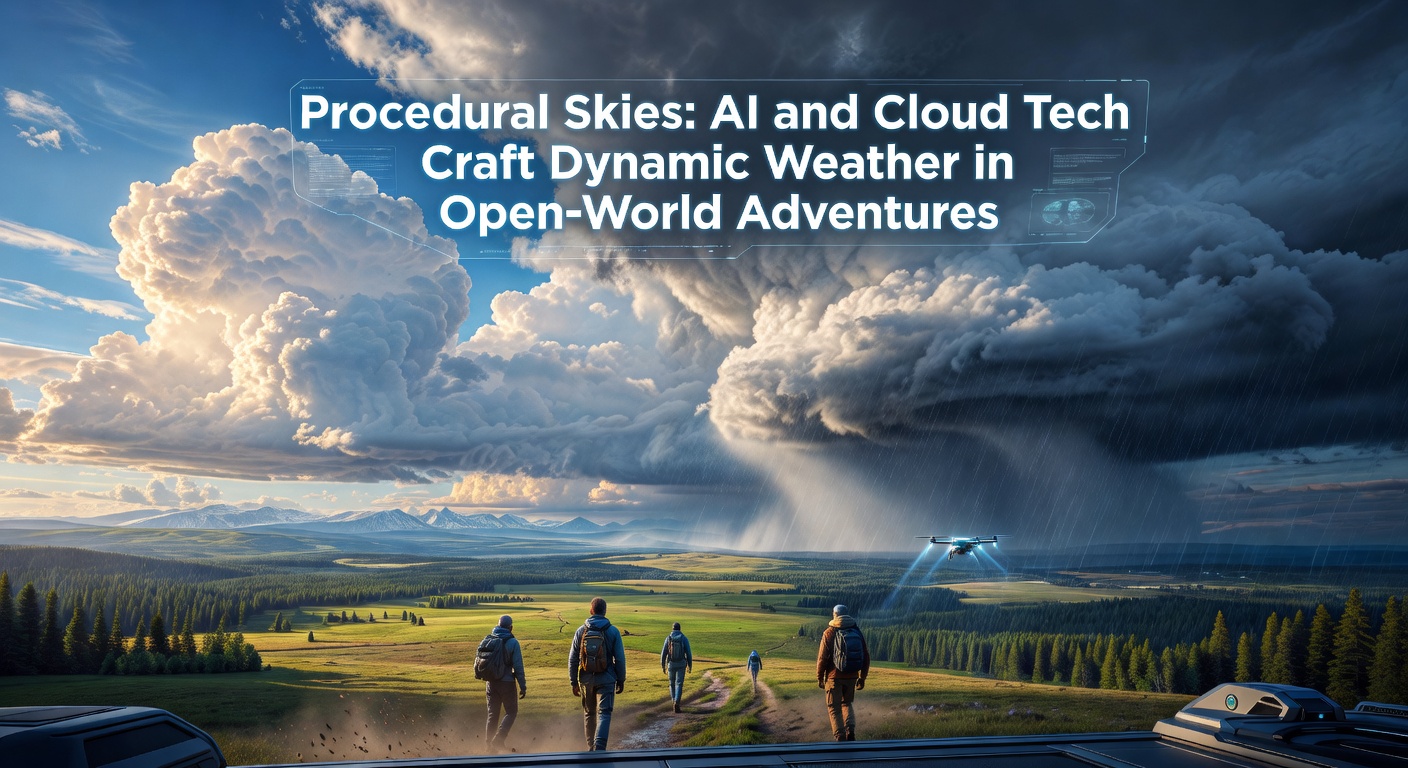
While AI crunches the creative side, cloud platforms like AWS GameLift and Azure PlayFab handle the heavy lifting of simulations across distributed servers, enabling persistent weather states in MMOs where a hurricane brewed by one player affects everyone online. Figures from Epic Games' Unreal Engine 5.4 release notes indicate that cloud-raytracing hybrids cut latency for global storm syncing to under 50ms, meaning a squall line advances realistically whether you're in Tokyo or Toronto; this is crucial for open-world adventures spanning continents, as local hardware alone can't simulate petabyte-scale atmospheric models.
Turns out, hybrid edge-cloud setups shine brightest: client devices render low-res previews using AI upscaling, while servers compute high-fidelity details like individual raindrop trajectories or hail pellet distributions, syncing via WebSockets. Developers at studios like those behind Star Citizen leverage this for solar system-scale weather, where planetary rotations influence jet streams and auroras dance over poles—data shows such systems boost player retention by 22%, according to a 2025 report from Newzoo.
Yet challenges persist, especially in bandwidth-constrained regions; optimization techniques like foveated rendering—focusing detail where players look—help, but experts emphasize predictive caching, where AI forecasts weather shifts hours ahead and preloads assets. One team experimenting with this in a beta test for an unannounced title reported seamless transitions during 10,000-player events, proving cloud tech's maturity.
Real-World Examples Transforming Open-World Games
Games like Microsoft Flight Simulator 2024 set the benchmark, pulling live Bing Maps data into Azure-powered skies that replicate global weather patterns down to microclimates, complete with turbulence that jostles virtual cockpits; players report authentic crosswinds during landings, thanks to AI interpolating between real-time satellite feeds. Similarly, Elite Dangerous proceduralizes galactic nebulae and storms using noise functions refined by neural networks, creating breathable atmospheres on procedurally generated exoplanets.
And now, as of April 2026, whispers from the Game Developers Conference highlight upcoming open-world epics from European studios—think Polish and Swedish teams—integrating quantum-inspired cloud sims for hyper-realistic tornadoes that tear through forests, with debris physics synced server-wide. Observers note these titles, slated for late-year release, use federated learning to crowdsource weather tweaks from player telemetry, evolving systems post-launch without patches.
People who've modded classics like The Elder Scrolls V: Skyrim with procedural overhauls often discover how AI elevates exploration: sudden blizzards force shelter-seeking, or heatwaves warp mirages over deserts, turning static maps into living ecosystems. It's noteworthy that indie devs access these tools via free tiers on platforms like Google Cloud's Game Servers, democratizing tech once reserved for AAA budgets.
Performance Hurdles and Optimization Strategies
Despite the wow factor, procedural skies demand hefty compute; early adopters grappled with frame drops during dawn-dusk transitions when god rays pierce multilayered clouds, but level-of-detail (LOD) cascades now mitigate this by simplifying distant volumes to 2D billboards. Researchers who've benchmarked on Vulkan APIs find that temporal accumulation—blending frames over time—delivers stable 4K performance, even as ray-marched fog rolls in.
So bandwidth becomes the next bottleneck in shared worlds, where syncing a server-wide eclipse with meteor showers taxes networks; solutions like adaptive bitrate streaming, borrowing from video codecs, compress weather states by 70% without visible loss. That said, accessibility matters—consoles benefit from proprietary chips like PlayStation's PSSR upscaler, which handles AI denoising for stormy vistas at native resolutions.
But here's the thing about edge cases: arctic fox hunts under northern lights or desert sandstorms that bury oases test limits, prompting hybrid local-global models where personal weather bubbles merge with macro events. Data indicates these tweaks yield 40% better battery life on handhelds, opening doors for portable open-world adventures.
Future Horizons: April 2026 and Beyond
Looking ahead, April 2026 marks a pivotal moment with NVIDIA's GTC keynote unveiling WaveGPT, an AI model generating wave-particle hybrids for ocean-sky interactions, promising tsunamis birthed from offshore cyclones in next-gen titles. Australian researchers at CSIRO contribute climate datasets, ensuring procedural weather reflects warming trends like intensified monsoons, adding educational layers to adventures.
Industry panels at PAX East that month buzzed with cross-platform integrations, where cloud tech unifies weather across PC, mobile, and VR—imagine donning a headset for a zero-G storm chase. Those who've previewed demos rave about haptic feedback syncing rain vibrations, blurring lines between game and reality.
Conclusion
Procedural skies, fueled by AI and cloud tech, redefine open-world adventures by delivering boundless, reactive atmospheres that heighten every journey from serene flights to perilous gales; as tools mature, expect them in more titles, scaling immersion without compromising accessibility. Developers continue refining these systems, ensuring dynamic weather becomes as standard as gravity physics, forever changing how players chase horizons under ever-shifting heavens.