Secure Computation Frameworks Power Anonymous Coordination in Augmented Training Simulations
Greta Schmidt · Aug 27, 2026
Secure Computation Frameworks Power Anonymous Coordination in Augmented Training Simulations
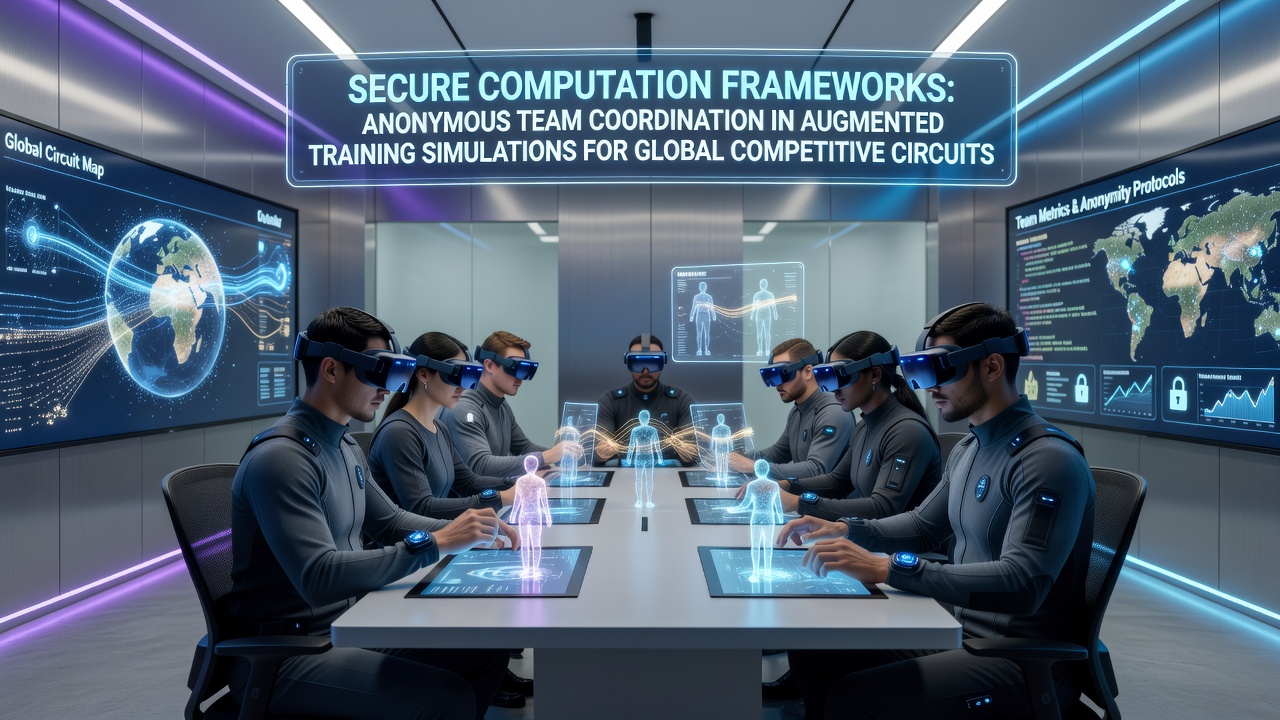
Secure computation frameworks combine cryptographic techniques such as multi-party computation and homomorphic encryption to process data without revealing individual inputs during collaborative sessions. These systems allow multiple participants to execute joint calculations on encrypted datasets while each party retains control over private information. In augmented training simulations for global competitive circuits, the frameworks support real-time synchronization of team strategies across distributed locations without exposing player identities or tactical details to external observers. Researchers at institutions across North America and Europe have documented how these protocols integrate with augmented reality overlays to create shared virtual environments. Data streams from biometric sensors and positional trackers feed into the computation layers, where intermediate results remain masked until final outputs are generated for all authorized users. As of August 2026, several esports organizations reported deployment of these tools in preparatory programs for international circuits, with participation metrics showing increased cross-regional team formations.Core Mechanisms Behind Anonymous Team Operations
Multi-party computation protocols divide sensitive inputs among computing parties so that no single entity reconstructs the full dataset during processing. Homomorphic encryption permits arithmetic operations directly on ciphertexts, yielding results that decrypt to match operations performed on plaintext values. Observers note that these combined approaches eliminate the need for trusted intermediaries in training scenarios where competitors from rival organizations must align on joint exercises.
Augmented reality headsets relay spatial data and command signals through secure channels that enforce zero-knowledge proofs. These proofs verify compliance with coordination rules without disclosing the underlying parameters. Studies from university laboratories in Canada and Australia indicate that latency overhead from such cryptographic layers stays within acceptable bounds for simulation environments running at 90 frames per second or higher.
Integration Patterns in Global Competitive Circuits
Training platforms connect participants through decentralized networks where identity management relies on cryptographic commitments rather than centralized registries. Team members receive session tokens that rotate at fixed intervals, preventing linkage of performance data across multiple drills. According to findings published by the European Union Agency for Cybersecurity, similar architectures have reduced information leakage incidents in simulated high-stakes environments by measurable margins.
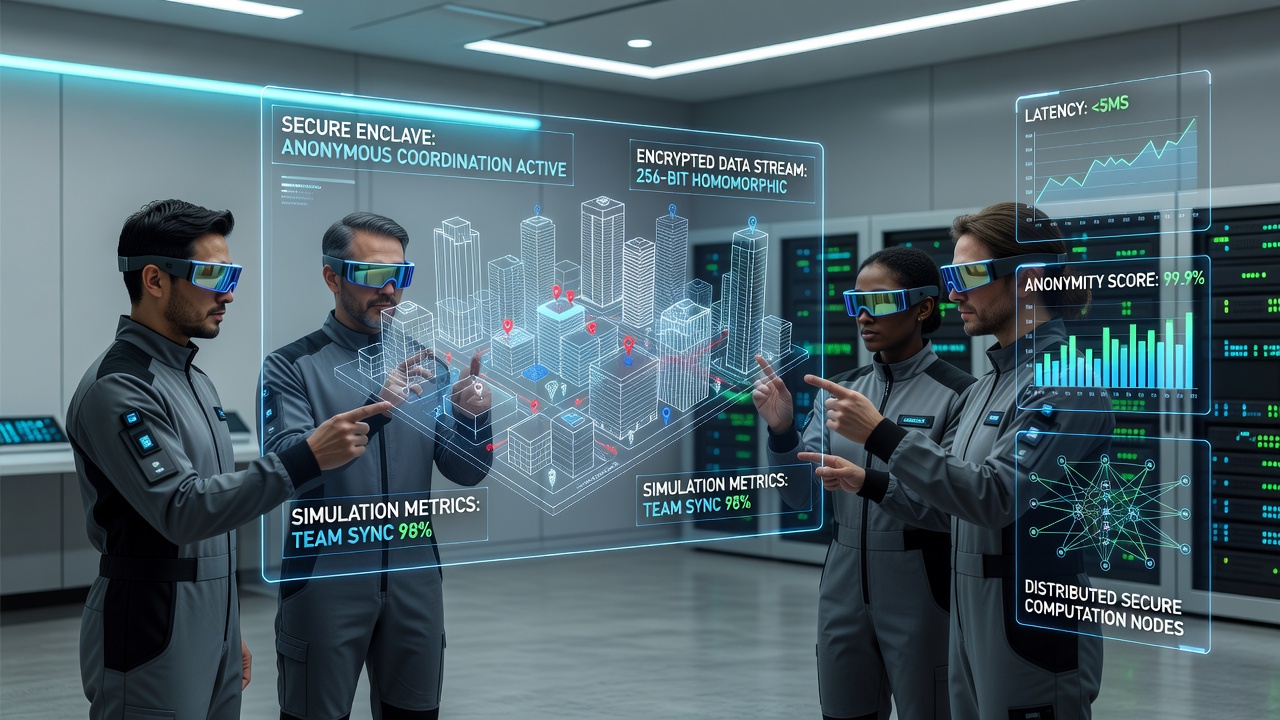 Circuit organizers schedule augmented sessions that blend physical movement data with virtual opponent models. Secure frameworks ensure that each competitor's movement vectors and decision trees contribute to collective performance scores without attribution to specific individuals. Figures released by the National Institute of Standards and Technology in the United States highlight ongoing standardization efforts that align these protocols with existing hardware acceleration modules found in portable training devices.
Technical Challenges and Implementation Records
Bandwidth requirements increase when frameworks handle continuous streams of augmented sensor data, yet compression techniques paired with garbled circuit optimizations have kept total transmission volumes manageable. One documented deployment in a European training facility processed inputs from twelve simultaneous participants across three continents while maintaining sub-50-millisecond response times for strategy updates.
Key management systems rotate encryption keys per session using threshold schemes that require agreement from a majority of nodes before any reconstruction occurs. This setup prevents single-point failures and supports the anonymous property even when individual devices experience connectivity drops during extended drills.
Future Standardization Efforts
Industry working groups continue to refine interface specifications that allow different simulation engines to interoperate under the same secure computation umbrella. Academic papers from institutions in Asia and South America have begun examining scalability limits when participant counts exceed several dozen in a single augmented session.
Conclusion
Secure computation frameworks supply the cryptographic foundation for anonymous coordination inside augmented training simulations used by global competitive circuits. Their adoption through 2026 reflects measurable progress in balancing performance demands with privacy guarantees across distributed participant groups. Continued refinement of these protocols supports expanding participation in international training programs while preserving the confidentiality requirements inherent to competitive environments.