Synchronizing Physics Calculations Across Decentralized Networks for Stable Multiplayer Interactions in Augmented Reality Mobile Titles
Theo Hoffmann · Aug 20, 2026
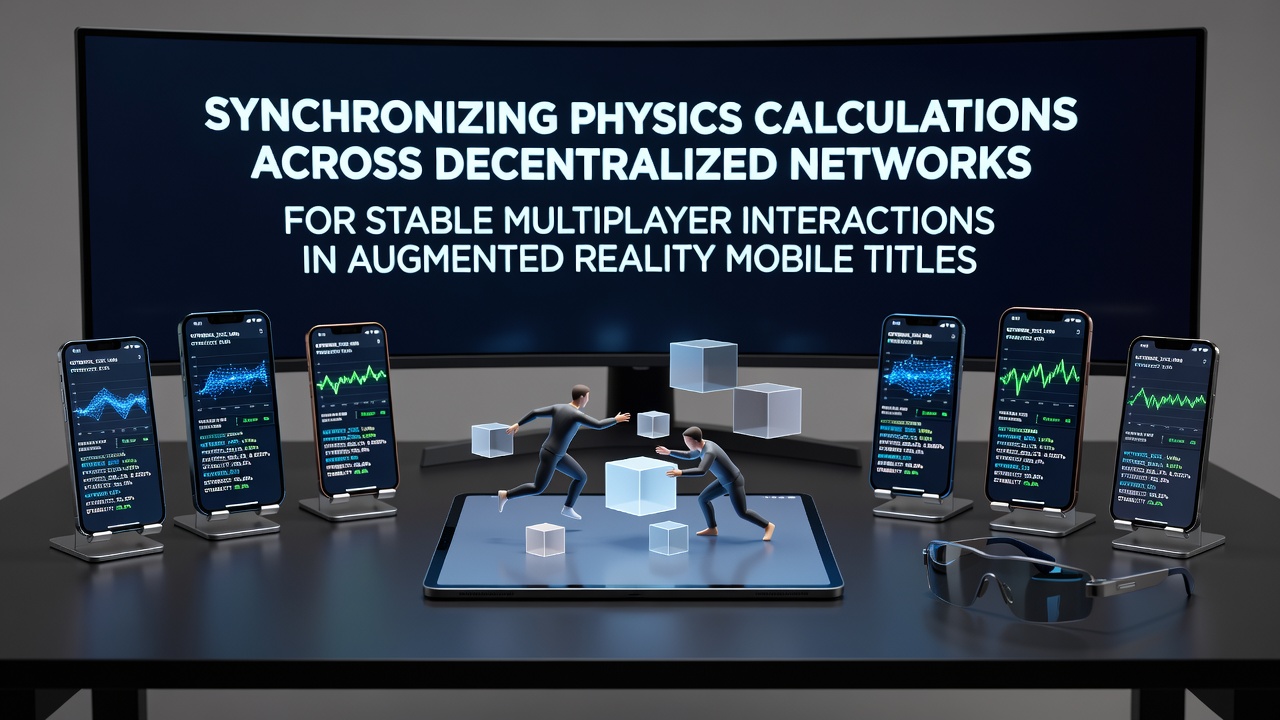
Synchronizing Physics Calculations Across Decentralized Networks for Stable Multiplayer Interactions in Augmented Reality Mobile Titles
Developers face persistent hurdles when physics calculations must remain consistent across players who connect through decentralized networks rather than central servers, and these issues intensify in augmented reality mobile titles where virtual objects interact with real-world spaces. Data from industry reports shows that latency variations and packet loss disrupt object trajectories, collision responses, and force applications unless protocols enforce strict determinism and reconciliation steps. Observers note that mobile devices add further constraints through limited processing power and variable wireless conditions, which compound the demands on any synchronization layer.
Core Challenges in Decentralized Physics Synchronization
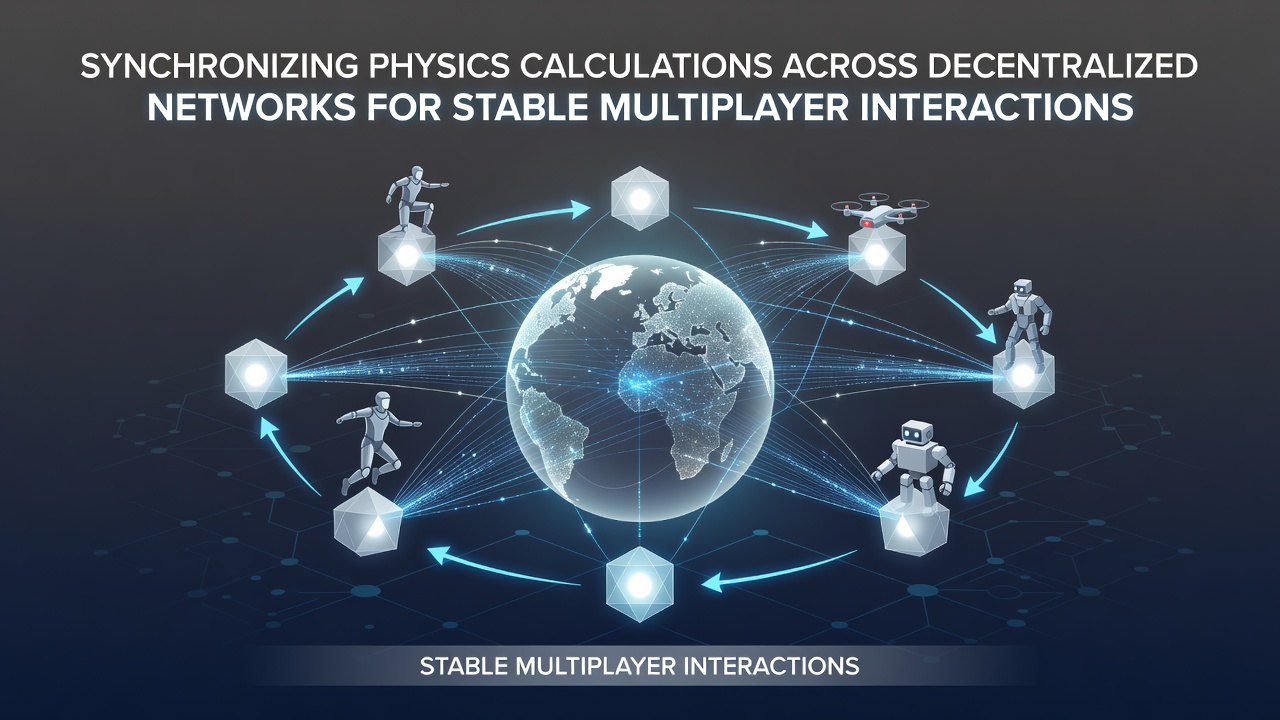
Decentralized architectures distribute authority among peer nodes, so each participant runs its own physics simulation while exchanging state updates to correct divergences. Research indicates that even small timing differences cause objects to occupy conflicting positions, and in AR settings these mismatches appear as jittery virtual items anchored to physical surfaces. Engineers address this through lockstep execution combined with rollback mechanisms that rewind and resimulate frames when late inputs arrive, yet such methods require careful bandwidth management to avoid overwhelming mobile connections. Studies from the IEEE Computer Society highlight how predictive interpolation fills gaps between updates, allowing smoother motion without sacrificing accuracy in shared environments.
Techniques for Maintaining Stability in AR Contexts
One approach relies on spatial partitioning that divides the shared play area into zones, limiting the scope of physics interactions each device must compute at any moment. According to findings published by the Australian Centre for Robotic Vision, zone-based culling reduces computational load while preserving consistency for nearby objects that matter most to local players. Another method incorporates deterministic random number generators seeded identically across all nodes, ensuring that procedural elements like debris scatter or wind effects produce matching results everywhere. Mobile titles further integrate device sensors such as accelerometers and gyroscopes to align virtual physics with real motion, though calibration routines must run continuously to counteract drift.
Network Protocols and Reconciliation Strategies
Protocols like those explored in distributed simulation literature employ priority queuing that sends critical state changes ahead of less urgent data, and reconciliation layers compare local outcomes against incoming snapshots before applying corrections. When discrepancies exceed thresholds, the system broadcasts authoritative adjustments that peers adopt without interrupting gameplay flow. Figures from the European Commission’s Horizon research programs reveal that hybrid models blending peer-to-peer exchanges with occasional edge-node verification cut desync events by measurable margins in field tests conducted through mid-2026.
Performance Considerations for Mobile Hardware
August 2026 saw several studios release updates that offloaded portions of physics workload to specialized mobile chipsets capable of parallel floating-point operations. These optimizations allow longer sessions before thermal throttling sets in, and they integrate with existing graphics pipelines to avoid frame drops during intense interaction sequences. Observers note that battery drain remains a key metric tracked by developers, prompting algorithms that scale simulation fidelity based on remaining power and network quality signals reported by the operating system.
Case Examples from Recent Deployments
Teams working on location-based AR experiences have documented successful implementations where players in separate cities maintained coherent physics across shared virtual structures. One project used anchor-based referencing tied to persistent cloud maps, which let devices recalibrate positions relative to fixed real-world landmarks rather than relying solely on relative motion tracking. Data released by the Fraunhofer Institute for Applied Information Technology shows that such anchoring lowered the frequency of corrective broadcasts needed during cross-regional matches.
Future Directions and Ongoing Research
Work continues on adaptive tick rates that adjust simulation speed according to observed network conditions, and machine learning models trained on historical play data now predict likely desync points before they occur. Researchers at institutions across North America and Asia continue to refine compression schemes for physics state packets, making decentralized exchanges viable even on congested mobile networks. These advances build on earlier deterministic engine foundations while addressing the unique spatial demands of augmented environments.
Conclusion
Effective synchronization of physics calculations across decentralized networks enables stable multiplayer interactions in augmented reality mobile titles by combining deterministic simulation, targeted reconciliation, and hardware-aware optimizations. Evidence from multiple technical studies confirms that these layered strategies reduce visible artifacts and maintain player immersion despite variable connectivity and device limitations. Continued refinement in protocol design and sensor integration promises broader adoption as network infrastructure and mobile processors evolve together.