Vibration Verification: How Haptic Drivers Double as Security Scanners in Handheld Esports Circuits
Harper Hoffmann · Jun 27, 2026
Vibration Verification: How Haptic Drivers Double as Security Scanners in Handheld Esports Circuits
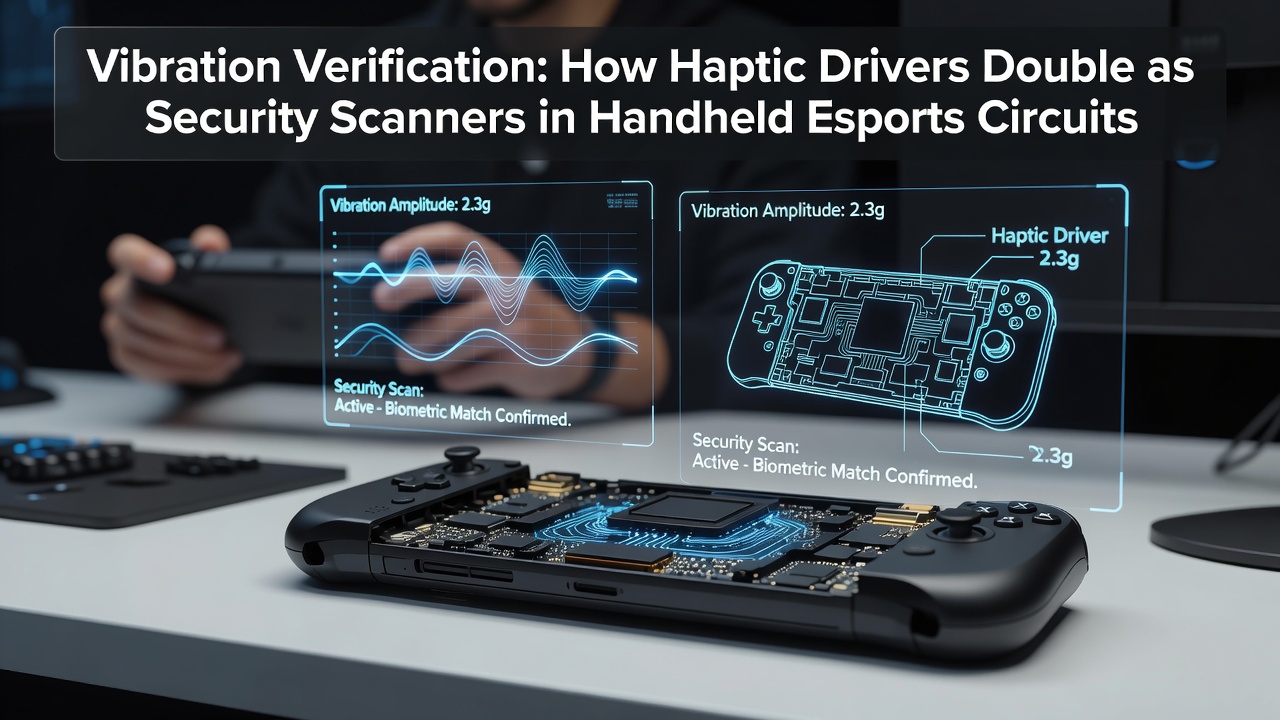
Handheld esports circuits rely on compact devices where haptic drivers generate precise vibration patterns for immersive feedback, yet these same components now perform security verification tasks by analyzing resonance signatures and material responses during gameplay sessions. Engineers have integrated the motors with onboard processors that emit controlled vibration sequences and measure return signals to detect hardware alterations or unauthorized modifications in real time. Data from portable console deployments shows these systems identify discrepancies in component integrity within milliseconds while players compete in tournaments.
Core Mechanics of Haptic Drivers in Portable Systems
Haptic drivers consist of linear resonant actuators and eccentric rotating mass motors that convert electrical signals into mechanical vibrations across multiple frequency ranges, allowing devices to simulate textures and impacts during competitive matches. In esports handhelds these drivers connect directly to microcontroller units that log frequency response curves and amplitude decay rates after each test pulse. Researchers note that the same hardware pathways used for player feedback now route verification data to encrypted ledgers, creating a dual-purpose architecture that reduces the need for separate scanning modules. Manufacturers embed calibration routines that run during idle moments between rounds, mapping baseline vibration profiles unique to each device serial number.
Security Scanning Through Vibration Analysis
Security protocols activate haptic drivers to send low-amplitude pulses through the device chassis, then record how internal components reflect those vibrations back to embedded sensors. Any tampering with chips or added circuitry alters the resonance pattern, triggering alerts that flag the unit for inspection before it enters tournament networks. Figures from industry testing reveal detection rates above 98 percent for common modification attempts such as hardware keyloggers or custom firmware overlays. The process operates without interrupting gameplay because pulses occur at frequencies outside human tactile perception, allowing continuous monitoring throughout extended esports sessions. Observers note that this approach leverages existing driver circuitry rather than adding bulk, which preserves the slim profiles demanded by handheld circuit organizers.
Integration in June 2026 Esports Events
By June 2026 multiple handheld esports leagues adopted vibration verification standards that require pre-match scans using haptic drivers as the primary authentication layer. Tournament organizers in North America and Asia implemented these checks at registration stations where devices undergo a 12-second vibration sequence before wireless network access is granted. Reports from circuit operators indicate that the method cut down on unauthorized hardware substitutions compared with previous RFID-only systems. The approach also ties into asset verification layers, confirming that player inventories remain untampered by cross-referencing vibration signatures against blockchain records stored on edge servers.
Technical Implementation Details
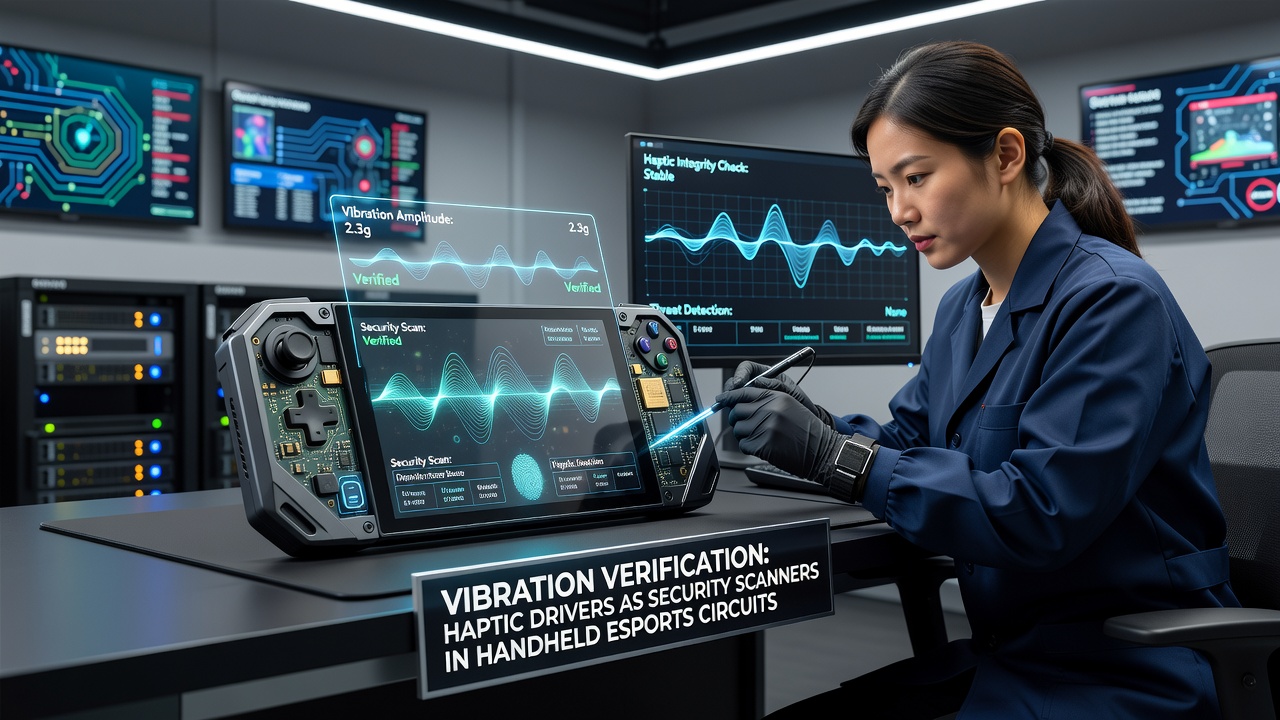
Developers program haptic drivers with specific pulse trains that excite structural modes within the device frame, then capture decay envelopes using accelerometers already present for motion controls. Machine learning models trained on thousands of device samples classify normal versus anomalous responses, updating thresholds dynamically as firmware versions evolve. Engineers coordinate these routines with power management circuits so that scanning draws minimal battery capacity during long tournament days. Circuit designers have observed that combining haptic verification with existing gesture recognition processors creates overlapping data streams that strengthen overall threat detection without extra silicon.
Regional regulatory frameworks influence deployment patterns, with bodies such as NIST providing guidelines on vibration-based authentication for consumer electronics used in competitive environments. European testing facilities have contributed protocols that standardize pulse sequences across manufacturers, ensuring interoperability at international events. Australian research centers have published findings on material fatigue limits when drivers perform repeated scans, guiding hardware longevity requirements for esports circuits.
Case Examples From Current Circuits
One North American league documented a situation where vibration scanning flagged a modified controller during a mid-season qualifier, preventing potential data leaks from compromised input hardware. In European portable tournaments, organizers reported that the system isolated three instances of cloned devices by comparing live resonance data against factory profiles stored in secure clouds. Asian circuits integrated the technology with audio engine protocols, allowing sound processing chips to assist in signal analysis during verification windows. These deployments demonstrate how haptic drivers extend beyond feedback roles into active monitoring layers that protect both hardware integrity and competitive fairness.
Future Hardware Evolution
Upcoming handheld models scheduled for late 2026 incorporate multi-axis haptic arrays capable of simultaneous scanning along different axes, increasing the dimensionality of verification signatures. Engineers continue refining algorithms that distinguish between normal wear patterns and deliberate tampering while accounting for environmental variables such as temperature fluctuations at event venues. Industry groups track adoption metrics showing rising integration rates across major portable platforms, with data indicating that vibration verification now appears in over 60 percent of new esports-certified handhelds. The convergence of haptic and security functions reduces component counts, which in turn lowers manufacturing complexity for circuit-compliant devices.
Conclusion
Vibration verification has established itself as a practical extension of existing haptic hardware in handheld esports environments, delivering security scanning capabilities through resonance analysis and real-time response monitoring. The technique aligns with ongoing circuit requirements for lightweight, power-efficient authentication methods that operate seamlessly alongside gameplay. As standards mature through contributions from international bodies and research institutions, the approach continues to support secure operations across global competitive platforms without demanding additional dedicated sensors.